Category Archives: Uncategorized

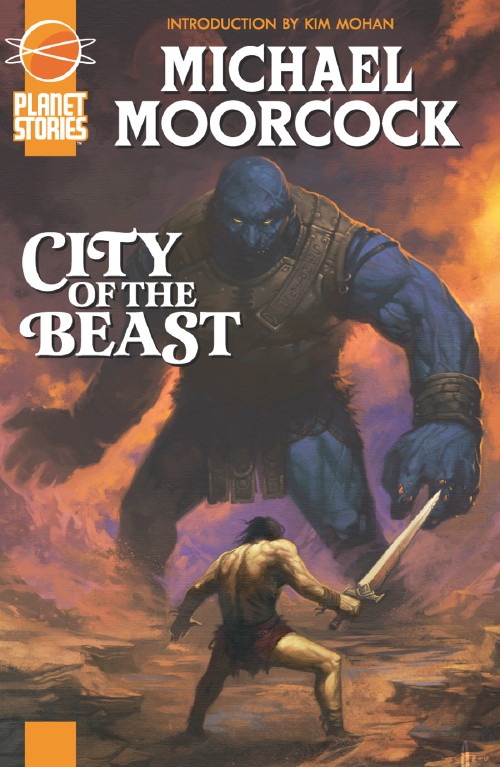
City of the Beast

Image from Paizo’s page

I just finished reading City of the Beast (also known as Warriors of Mars), Moorcock’s tribute to the planetary romance of Barsoom. I picked this up during Paizo’s recent sale. It is indeed highly derivative, and even eschews Moorcock’s standard problematic hero in favor of a chivalrous John Carter clone (though Michael Kane hails from the 1960s, and fought in Vietnam rather than the US civil war).

Almost needless to say, I didn’t care about a single one of the extremely simple characters, but there are still some interesting setting ideas here. The humans of Mars (or Vashu, as the inhabitants call it) have a well established civilization of graceful, tall buildings of white stone and blue marble with golden traceries. They also possess much lost technology from an ancient race called the Sheev (page 32):

They are very great and few of them still live. They are remote and of an older race than any on Vashu. Our philosophers speculate on their origin, but we know little about them.

And (page 39):

We are content simply to use the things of the Sheev. We were warned in the far past never to tamper with their gifts since it might result in disaster for us! Their mighty civilization once suffered a disaster, but we have only a few legends which speak of it and they are bound up in talk of supernatural entities in whom we no longer believe.

These artifacts include mind-crowns that allow people who don’t speak the same languages to communicate (how convenient), flying ships, light sources which “had once burned much brighter” (nice!), “ethercraft” (space ships), and laser sidearms. Repairing and recharging these items is beyond the knowledge of Vashu’s people, which makes them perfect “magic item” treasures for a tabletop RPG.

Also briefly mentioned in passing are the Yaksha, “ancient enemies of the Sheev but originally of the same race” (page 116). The Yaksha left ancient ruins spread over vast plains covered in black mud and stunted, sinister shrubs.

By the way, despite the cover image, the blue dudes are supposed to be 8 to 10 feet tall (not 20 feet or more). They are called Argzoon and are standins for the noble savage Tharks of Barsoom, though they live in an underground cavern city located in the Caves of Darkness.

Attack Ranks as Attack Bonuses

Following on my discussion of OD&D AC yesterday, here is how to use OD&D attack ranks with the d20 SRD armor system (which uses armor class as target number, also known as ascending AC).

Attack Ranks
Rank Weak (Magic-user) Average (Cleric, Thief) Strong (Fighter) Attack Bonus
1
levels 1-5
levels 1-4
levels 1-3
+0
2
levels 6-10
levels 5-8
levels 4-6
+2
3
levels 11+
levels 9-12
levels 7-9
+5
4
levels 13+
levels 10-12
+7
5
levels 13-15
+9
6
levels 16+
+12

NOTES

Read the table like: clerics of levels 9 through 12 have attained attack rank 3 and have a base attack bonus of +5.

Again we see the power of three at work here. Weak, average, and strong fighting capabilities are enough to distinguish the classes from each other. Other than a category for not progressing at all, I can’t see any finer granularity adding much value to gameplay.

I have capped the progression of the weak and average classes. It should be obvious how to extrapolate the progression if you want it to be unlimited for all classes. I prefer that the pinacle of fighter combat achievement be higher than other classes.

Yes, it’s a table lookup, but it’s offline, not during the game, so who cares?

Simplified d20 SRD armor bonuses:

Armor Bonuses (Simplified)
Armor AC Bonus Penalty Exploration Tactical
light (leather)
+2
0
120′
40′
medium (chain)
+4
-4 (-20%)
90′
30′
heavy (plate)
+6
-6 (-30%)
60′
20′
shield
+1
-1 (-5%)
N/A
N/A

The really cool thing about this is that there are only 24 different possibilities to remember, and all of them are distinct. So players could potentially use whatever interface they prefer, and it would be all the same to me. So, all are equivalent: I hit plate, or I hit AC 3, or I hit AC 16 (my notes generally use the “AC as plate” form).

The penalty is for ability checks and thief abilities. This is taken directly from the d20 SRD, but the numbers work with the original game, so why not? The movement rates are the same as in this encumbrance system, just presented in a slightly different form.

Armor Equivalencies
Armor Descending AC Ascending AC
Unarmored
9
10
Shield
8
11
Leather
7
12
Leather & shield
6
13
Chain
5
14
Chain & shield
4
15
Plate
3
16
Plate & shield
2
17

I’m sure you have seen similar tables to this before, but I include this one here to show the minimum knowledge I need to keep in my head. You’ll also notice that the ascending AC column above is identical to the first OD&D combat rank.

THAC2, OD&D AC, and Combat Ranks

In OD&D, there are only 8 armor classes. AC 9 is the worst (unarmored) and AC 2 is the best (plate & shield). Each number maps reliably back to a given armor type. So, presented with AC 5, you know that means chain armor (or medium armor, if you’re abstracting it).

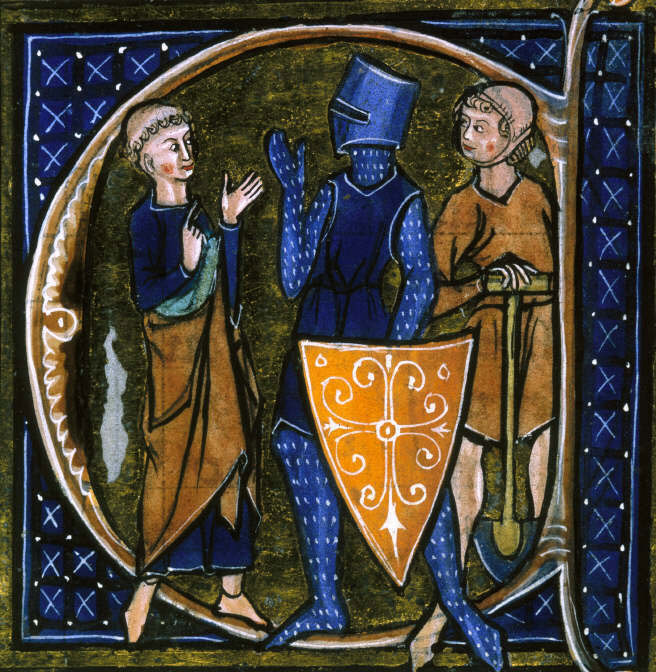
Probably medium armor, depending on your setting (source)
  1. Plate & shield
  2. Plate
  3. Chain & shield
  4. Chain
  5. Leather & shield
  6. Leather
  7. Shield
  8. Unarmored

There are no other armor classes in the whole world. If you roll well enough on your starting gold, you can begin at first level with the best armor class in the game (plate armor and a shield cost 60 GP, well below the expected value of 3d6 * 10 starting GP, which is 105 GP). Contrast this with the cost of full plate in Second Edition: 4000 – 10000 GP.

Magic armor does not modify AC, but rather penalizes the attack roll, and the most potent magic armor in Men & Magic is rated +2. By the book, magic shields only help one third of the time, and only if the magical bonus of the shield is greater than that of the armor (i.e., they don’t stack). That requires an extra die roll per combat (extra fiddly), and so will almost certainly be something I jettison. Maybe I’ll house rule magic shields to an additional flat penalty of 1 to the attacker’s roll, along with the full magic bonus for certain saving throws (like dragon breath). I’ve always liked the idea if shields being extra good against dragon breath. [Edit: see here for a clever way from Talysman to handle the shield chance without resorting to another die roll.]

In addition to this form of fixed descending AC, OD&D uses something that I referred to in a previous post as a matrix of combat ranks (my words, not from the book) rather than THAC0 or attack bonus. All classes move through the same ranks, but fighters move through them faster (advancing to the second rank at level 4, when attaining the “hero” title). From Men & Magic, page 19:

Magic-users advance in steps based on five levels/group (1-5, 6-10, etc.), and Clerics in steps based on four levels/group (1-4, 5-8, etc.). Normal men equal 1st level fighters.

I actually like this staggered progression (which is preserved in Moldvay Basic), because it means that PCs need to survive by their wits for a while before they get any mechanical advancement (though I can see why some people might like a smoother progression, and in fact using Target 20 with a smoothly advancing attack bonus seems to be one of the more common OD&D house rules).

Attack Matrix 1

The OD&D approach does have some drawbacks compared to both THAC0 and armor class as target number (more commonly known as ascending armor class). THAC0 is easier to reason with than attack matrices, and direct target numbers don’t require any math (other than situational bonuses and penalties, though in practice those modifiers can end up being rather complicated in 3E).

In the end, all these systems are about the same level of complexity, and all require writing the same amount of numbers on the character sheet. In OD&D, you write down your attack rank column (which is a list of target numbers). In 2E, you write down your THAC0 (and probably derive your other target numbers from that). In 3E, you write your base attack bonus adjusted by all the other modifiers next to every weapon (if you are efficient).

However, the matrix approach does have some benefits, the main one being that anchoring AC helps prevent absurd bonus inflation (especially coupled with the simplicity of ability scores in OD&D). This helps make it clear that while mechanical combat advancement is part of the game, it is not the biggest part of the reward structure. Also, simple AC categories may help make weapon versus AC possible (though you do have to deal with rulings about monster hide being similar to what kind of armor).

This is one reason why I don’t care for the extra d20 SRD armor types that managed to creep into Labyrinth Lord. They break the elegant simplicity of the light, medium, or heavy armor types (modified by a potential shield) present in OD&D and Basic D&D. Obviously there are more types of armor than leather, chain, and plate; however, it does not seem useful to make a distinction regarding armor class past that threefold categorization (other differences can be handled by ruling; for example, chain mail could be used as a crude filter, something that it would be difficult to do with hide armor).

D&D Phase Shifts

Image from Wikipedia

JB over at Blackrazor has been writing (one, two, three, four, five) about the phases of D&D (dungeon delving, wilderness exploration, and domain endgame) and how the traditional D&D incentive structure works well for the first, okay for the second, and not so well at all for the third. I more or less agree with his overall analysis. New incentives need to be discovered for domain play, and not just collecting taxes (because that is boring).

As idle thought experiments, here are two variations on the traditional phase-based D&D game. In the first variation, you tell the story backwards. You already have a lord or wizard with a stronghold and followers, and the game is to figure out how they got there. Unlike standard D&D, final death can’t be a danger because you already know that your character makes it to name level. Also unlike standard D&D, the game would end when you reach first level or 0 XP, rather than potentially going on indefinitely.

Would there be a way to make D&D played backwards interesting? I’m not sure, maybe 1d3 adventures per level, with each “death” leading to some sort of complication that would draw out the particular adventure. So getting from name level back to the beginning with the fewest complications would be the achievement. I feel like there is some connection here to the idea of planning out build options up to high levels like is sometimes done in 3E and 4E.

Now for the second variation. What if players started out with a stronghold? Either one per player or collectively. I feel like this would probably feel very different from D&D, despite the fact that all the rules would be identical for things like classes and spells. I’m not sure exactly why this would be the case, except perhaps that in the standard dungeon to wilderness to domain play (assuming a relatively deadly and impartial referee), everything is earned, whereas in this proposed structure you get everything for free. Also, people would not be as attached to their individual characters and thus perhaps not care as much about their advancement.

I imagine such a game progressing by first setting a basic stage (surroundings, stronghold capabilities, followers) and then advancing domain turns (probably one month per turn) to see what happens, based on some series of event tables. Scope could be zoomed in or out as necessary, so for wilderness expeditions, the players would zoom down to the perspective of questing knights and their squires (or magic-users with warders seeking rare spell components).

What would the overall motivation be to keep playing? Perhaps, like Dwarf Fortress, to see how many domain turns you can keep the whole thing going before being overwhelmed by an orc invasion or releasing some nameless menace from a long-sealed tomb? Individual characters need not gain levels (knights could just be level 4 fighters, for example) but I could see gaining powerful magic items still functioning as a reward of sorts. Does this just turn into a war game? Perhaps, but I’m not sure; especially if there are not opposing player-controlled sides.

Beginning complexity would also be higher than traditional D&D (and thus character/domain generation requirements would be heavier), but since there would be multiple characters (a lord, knights, spies, dungeoneers), lethality would not be problematic like it is in heavy chargen systems that make you put all your eggs in one basket. Such a basket is easily sent to the grave with a bad save versus poison roll.

Part of the tension here might be that when playing D&D, people want (or at least expect) to play an individual, whereas the domain level game is really less about individuals and more about collectives. This is why the incentives at the individual level don’t seem to make as much sense. Thus, maybe Game of Thrones style intrigue from the beginning just doesn’t work as well in a game, or at least not in the compulsively obsessive way D&D does.

Planet Hulk


After starting to follow people in the OSR, I’ve begun to pick up a comic book now and then. I saw Planet Hulk mentioned over at Sword & Shield a number of months ago. The premise is more or less Hulk as John Carter or Hulk as He-Man. The Hulk’s friends trick him into going to another planet (because they think he is too dangerous on Earth) but the shuttle navigation messes up and he ends up on this savage Barsoom-like world instead of the idyllic planet they had originally selected. There is also an animated movie (which I have not seen). In the afterword, the genesis of the idea is described as Hulk + battle axe + alien planet, which is a pretty accurate description of the end product.

There are plenty of Hulkish themes present which work pretty well in the context of Planet Hulk. Normal people need “monsters” to save them when they are in danger, but when civilization returns, they turn on the monsters. What if the Hulk was in a world where his anger was a gift rather than a curse? There are parasitic space zombies called spikes which could work well in a tabletop game.

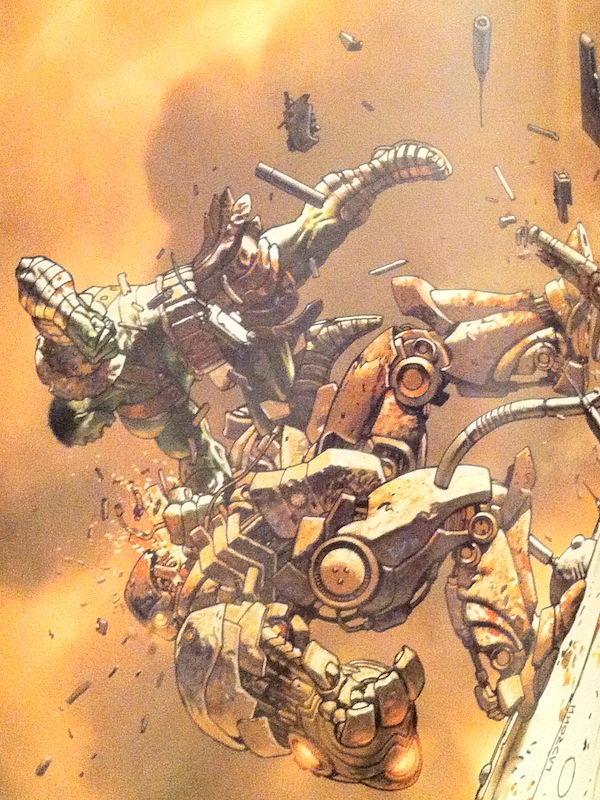
This is not so much a story as a pastiche of ancient Rome, Spartacus, Barsoom, Conan, and Hulk. The plot is very simple, and most of the characters other than Hulk don’t seem to have any motivation. Who is the Red King and why does he like to don power armor and fry his subjects? It is not explained; he is merely a cookie-cutter despot. There are some great cover illustrations, like this one:

How about these dudes as red elves of Areon?

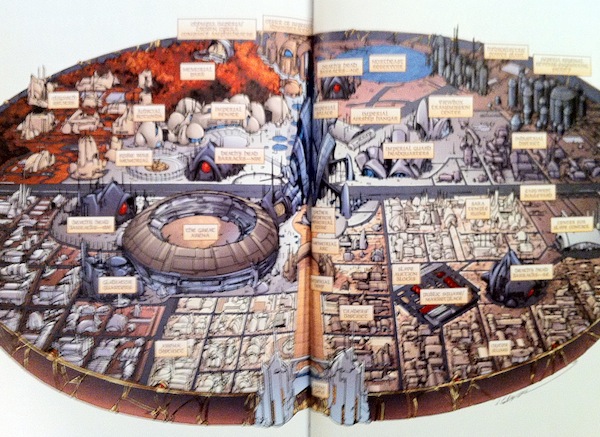
Also, the back of the trade paperback edition has something like a gazetteer of the planet Sakaar. There are descriptions of the major areas, characters, and some maps (one of the land and another of the capital city). One could easily base a pretty interesting campaign on this material.

Cleric XP

Healing of the Demon-Possessed

The cleric part of my recent XP awards post was becoming too complicated, so I decided that it deserved its own space. The process of thinking through what clerics would spend money on was also revealing lots of setting details which seem naturally to belong together. See also the general post on clerics for more background. So here, without further ado, are some ways for clerics to convert their GP to XP, and serve their order in the process.

NAMING. Knowing the true name of a person or creature gives you power over them. Demons and sorcerers are particularly vulnerable to someone that has their true name. Thus, where possible, it is traditional to have a cleric perform a naming ceremony. In the process, the cleric will discover the person’s true name, and record it in the hidden language of law. That cleric, and any of their acolytes, will have access to this true name in the future. They will also sometimes bestow a use-name (some people consider this lucky). Most people willingly entrust their true name (and the true name of their offspring) to the clerics, because they would not want to live as a diabolist (and it is assumed that demonic influence is behind people becoming diabolists). Rich people will be able to pay for the entirety of the ritual, but the poor are dependent upon the cleric’s generosity. The ritual components cost 1d4 * 100 GP and require one day to prepare and execute. The procedures involve preparing special incense, meditation, and copying certain scriptures. When clerics meet, one of the common tasks is to exchange the true names so collected.
CONSECRATION. Some sites have been tainted in a way that can only be purified by the mysteries of the light. In addition, once hauntings have been dealt with, the sites must often be blessed. Cost is 1d6 * 100 GP plus a save versus magic to avoid consequences. Shrines may also be constructed for a similar cost, and do not require a saving throw (though they are really only worthwhile in a town or settlement that does not yet have a shrine). If the shrine houses a relic (the remains of a fallen cleric), special procedures are required (in addition to the return of the relics, if they are missing). Such a shrine has a level and can be used by clerics during level up. The cost of the consecration ritual is 1000 GP * level, in addition to any architectural costs required. The shrine of a great matriarch or patriarch, for example, may be an elaborate affair.
EXORCISM. Much like naming, rich people will be able to pay for an exorcism, but the poor will not. The components for an exorcism cost 1d6 * 100 GP and the ritual will usually take one day, but may take longer depending on the strength of the possession. A save versus spells is required for complete success, and a fumble may have extremely dire consequences (but then, continuing demonic influence may also have dire consequences).

EXEGESIS. The Mysteries of Light are deep, and there is always more to discover, both in the scriptures themselves, and by communing with higher powers. This functions in the same way as magic research, and also requires a save versus spells to avoid unintended consequences, such as the attentions of dark spirits.

JUDGMENT. In addition to being demon hunters, clerics carry the law of the True Empire wherever they go. This is one of the reasons that they often have problematic relationships with secular authorities in these degenerate times. Many clerics seek out the worms nestled in the timber of civilization. Communities generally don’t like to expose the skeletons in their closets on their own, so clerics must bring their own resources to bear on the problem. Spend 1d6 * 100 GP and make a wisdom check (less than or equal to on a d20). If successful, roll on the Pronouncing Judgment table (which I admit does not exist yet, and so will require improvisation). Otherwise, roll on the complications table (also still imaginary). Note that adventure leads, rumors, and other info may be discovered in the process of judgment.
Funeral Procession of Sir Philip Sidney

LAST RITES. The dead are particularly vulnerable to the attentions of necromancers and demons. Some believe that souls are unable to find their way to the afterlife without the final rites. Others believe that eternal peace and extinction of the soul (the alternative being endless purgatorial wandering) require a cleric’s rites. The mysteries are silent regarding the truth (at least, silent to the uninitiated), but few wish for their fate to be unending undeath, forever hungering again for the warmth of life. Cost is 1d6 * 10 GP for a commoner’s funeral in addition to an evening of work (or a full day if a gravedigger is not available). The rich will demand more lavish affairs, and will generally be able to pay for them. Putting the spirit of a great adventurer to rest, however, is a more involved affair and requires 1000 GP per level of the deceased character. However, such expenses are often wise: the wraith of a powerful warrior is a terrible thing to behold.


INITIATION. Most people cannot become clerics on their own (though there are exceptions, people who are able to figure out the beginning of the mysteries on their own, either from the panoply of a fallen cleric, or from visions). Instead, they must be initiated by an existing cleric. Clerics of fourth level or higher may initiate new clerics. This requires the copying of a holy book, and a ritual that consumes many rare components. The total cost is 1000 GP. Because of the great expense and effort that initiation involves, generally the aspiring cleric will serve a period of apprenticeship and training beforehand. The new cleric begins with the title Acolyte.

Note that most of these prices are either guesses or loosely based on the carousing costs. I reserve the right to change them later based on play experiences.

An Added Incentive

Vincent Baker’s entry in the LotFP grand adventure campaign (The Seclusium of Orphone) looks really interesting to me. In essence, it is a random wizard tower generator (something I have been thinking of putting together myself, actually) along with an example tower and scenario. In addition, it is intended to be a tribute to Jack Vance.

I knew that Vincent Baker had written Dogs in the Vineyard, but what I didn’t know before today was that he has also written In a Wicked Age and Apocalypse World. Wouldn’t you like to see this creativity chained to a simple traditional fantasy game like Lamentations? I certainly would.

But I’ve already contributed to the adventure campaign. I dallied to begin with, because there were so many options, and also because it was not clear where my contribution would do the most good. I narrowed my options down to $100 towards one project or $30 towards three different projects. As the front runner (Broodmother Sky Fortress) was still unfunded as of this morning (though it was getting close), I finally decided that that would be the best place to put my resources.

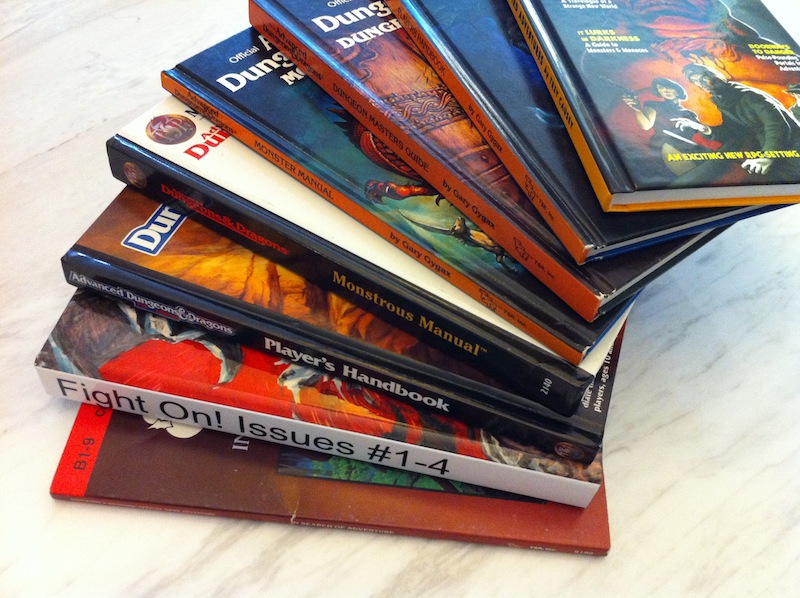
So what’s the deal with that stack of books in the picture above? I have a number of RPG books that I don’t use very much, but are in great condition, either like-new or lightly used. Some of them are duplicates, some of them are just books that I don’t see myself using much in the future for whatever reason. For example, I now have 2.66 copies if the AD&D core set, and an extra copy of the excellent Weird Adventures by Trey Causey. I’m not a collector, so I don’t see any value in keeping some of these books when they could be getting some use. If you contribute $100 towards Broodmother Sky Fortress (until it funds) or The Seclusium of Orphone (until it funds), I’ll give you one of these books, and pay for shipping too. First come, first served. Note that not all books in the list are in the picture, and there is no attempt at a parity of value. Also note that I will only send you the free book if the campaign in question reaches the target, as you will get your money back from IndieGoGo if it doesn’t.

  • B1-9 adventure collection (there is a small bend in the spine) (reserved for AB)
  • Hardcover Fight On! compilation of issues 1 through 4
  • Second Edition Player’s Handbook
  • Second Edition Monstrous Manual
  • AD&D Dungeon Masters Guide (orange spine) (reserved for AV)
  • AD&D Players Handbook (orange spine) (reserved for JW)
  • AD&D Monster Manual (orange spine) (reserved for olajostein)
  • Judges Guild Ready Ref Sheets
  • Weird Adventures hardcover (reserved for JA)
  • Microscope paperback (reserved for JS)
  • D&D Fourth Edition DMG 2
  • D&D Fourth Edition Open Grave (the 4E undead book)

I know that for the cost of shipping these I could contribute more to the campaigns myself, but if even a few people take me up on this offer, it will help more to get other people to contribute. I figure that if some people are still on the fence or unsure which project to back, this might help.

The fine print: Raggi has nothing to do with this, it’s all me. So if I screw something up, you can’t blame him. If you have any questions about a specific item, please ask. I’ll ship to anywhere in North America or Europe, but if you live somewhere else, please check with me first. I don’t want to be stuck paying $50 to ship a hardcover to Mongolia or something. Also, the deal is only good for people who help out with these projects during this final stretch, not those that have already contributed. Sorry about that, but fairness is not my aim here.

Weapon & Armor Strengths

Weapons table from the Ready Ref Sheets

I have written previously about redesigning the weapon versus AC modifiers as bonuses, and then making access to that table a fighter benefit. Basically, the idea was to reformulate the table as only bonuses, and then give that table to the players of fighter characters. As it would always be a good thing to use the table, players would be incentivized to pay attention to that sort of thing, and probably also be incentivized to carry more than one kind of weapon (so that they would be able to have advantages against different kinds of enemies).

Redoing the weapon versus armor class table is hard though, so I never managed to bring that idea to fruition. But what if we don’t change the numbers at all, but rather only read the parts of it that are advantageous to the player? We can still keep the negative numbers, but rather than weapon penalties against certain kinds of armor (players are not going to try very hard to remember that), instead consider the negative numbers as armor strength against particular weapons. So, for example, if you are wearing plate armor, you can impose a -3 attack penalty against someone attacking you with a dagger. I think this table is identical to the one in Supplement I: Greyhawk, other than the omission of the military pick.

(Aside: I believe that second column, the one that goes 1, 1, 3, 4, 5, 6, etc is supposed to indicate weapon length. This could be used to determine space required or initiative. But that is a topic for another post.)

So here is a version of the data in the above table, displayed as benefits and by diegetic armor type rather than AC number. Players obviously only need to pay attention to the weapons they have. Unless otherwise noted, all penalties and bonuses are 1.

WEAPONS: STRONG AGAINST

  • dagger: unarmored (+2), shield
  • hand axe: unarmored, shield
  • mace: plate
  • hammer: chain, plate
  • battle axe: chain, chain & shield
  • morning star: unarmored (+2), shield (+2), leather, leather & shield, chain (+2), chain & shield
  • flail: unarmored, shield, leather, leather & shield, chain (+2), chain & shield, plate (+2), plate & shield (+2)
  • pole arm: unarmored (+2), shield (+2), leather (+2), leather & shield, chain
  • halberd: leather & shield, chain (+2), chain & shield, plate
  • two-handed sword: unarmored (+2), shield (+2), leather (+2), leather & shield (+2), chain (+3), chain & shield (+3), plate (+2), plate & shield
  • mounted lance: unarmored (+3), shield (+3), leather (+3), leather & shield (+3), chain (+2), chain & shield
As an example, the way to read the first weapon entry above is that daggers are very good against unarmored combattants (a +2 bonus to attack) and good against leather armor (a +1 bonus to attack). You will note that there is no entry for swords. That’s because according the Ready Ref Sheets, swords aren’t good against anything. Same goes for spears and pikes.
I’m not sure I really like these numbers, so I might tweak them, but for this exercise I’m leaving them as is. It looks like morning stars, flails, and two-handed swords are the standout champions, probably too much so.

ARMOR: STRONG AGAINST

  • chain: hand axe, spear
  • chain & shield: hand axe, spear, dagger
  • plate: dagger (-3), hand axe (-2), sword, spear
  • plate & shield: dagger (-3), hand axe (-3), sword (-2), spear (-2), pole arm, pike
The way to read the first armor entry above is that chain armor is good against hand axes and spears, so if you are wearing chain you can force opponents wielding those weapons to take a -1 to their attack roll.
I find the presentation of those lists above far more approachable than the rather complex matrices that have shown up in various early books. Those just look like a mess of plusses and minuses. Using this format, a fighter with a hand axe just needs to look out for lightly armored targets and remember to apply their bonus.

Only Ten

If you could only keep ten of your printed RPG books, which would you pick? I asked this question a while back on Google Plus, and got some interesting answers (I also learned about some awesome books, like the Warhammer Realms of Chaos volumes; thanks Zak!). Then recently this TSR versus OSR thread came up on ODD74. I do not generally enjoy false choice hypotheticals, but it did make me recall this exercise, which is sort of an empirical version of the same idea.

I’m going with the following arbitrary conventions, because restrictions are fun. First, it has to be something I actually own and a physical book. Second, the decision has to be based on content not rarity or value (though content can incorporate things like nostalgia value and artwork).

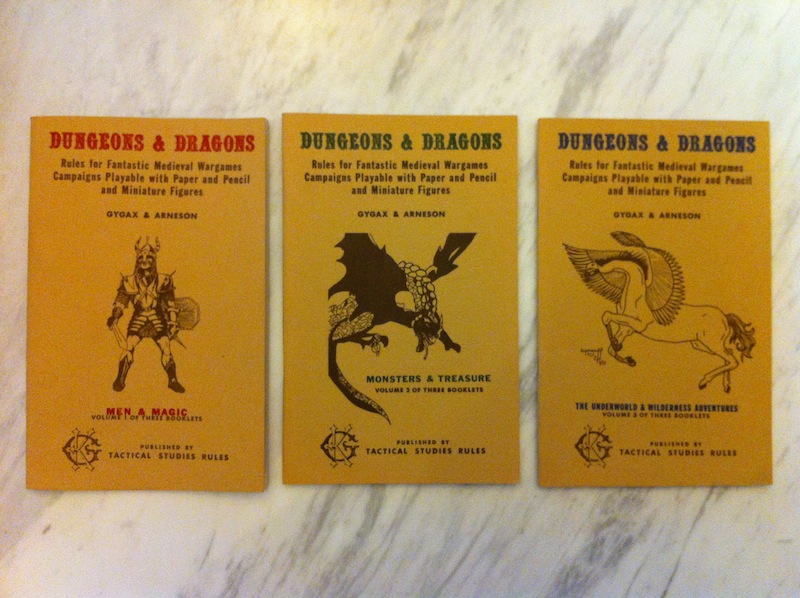
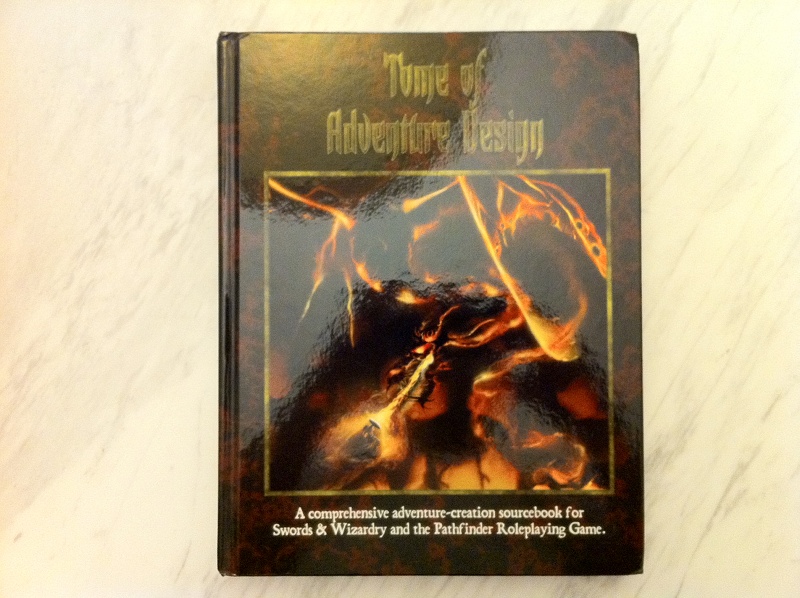
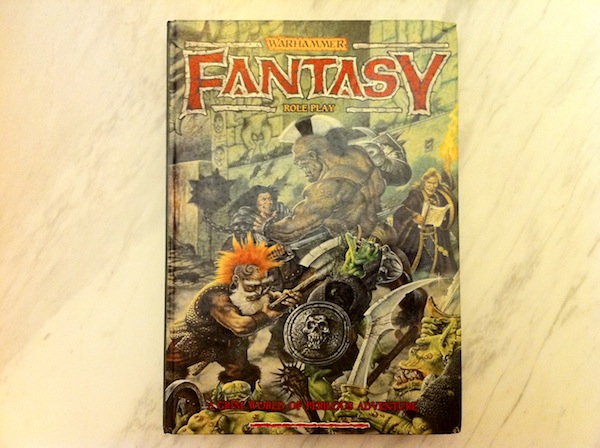
The original list that I posted to G+ was the following: AD&D DMG, the 3 OD&D booklets, LotFP Referee book, S1-4 Realms of Horror, The Guide Book to Taladas, D&D Rules Cyclopedia, and Warhammer Fantasy Roleplay, Tome of Adventure Design. I have changed a few items, but it has remained largely the same.

Also, I know many people think very highly of the core Wilderlands books, and some of them probably deserve placement. I only have them in badly-scanned RPGNow PDFs though, and so I haven’t really spent much time with them. So they are disqualified both for technical reasons (not books) and for practical reasons (I really haven’t used them much).

So how do the TSR and OSR camps fare?

  • 4 early TSR (original D&D and the DMG)
  • 1 Judges Guild (Ready Ref Sheets)
  • 3 OSR (LotFP Grindhouse, TOAD, Carcosa)
  • 1 more recent non-OSR (Vampire)
  • 1 alternate take on fantasy from the 80s (Warhammer)

Also, when I was doing this, I couldn’t actually keep it to only ten, so I included some runners-up also. The runners-up are about evenly divided between “original” material and OSR material.

This is not just an idle exercise, as I might be spending a few months in London at the end of the year, so I might actually have to pick a few books to take with me.

I, II, III: Dungeons & Dragons. Suggestive rather than prescriptive. By the time we get to AD&D, we can already see all the tendencies of modern games in proto form. Here, things are still wide open. And the systems are really elegant, if you can get past the bad organization. Concise though, so still faster to learn than most bigger games.

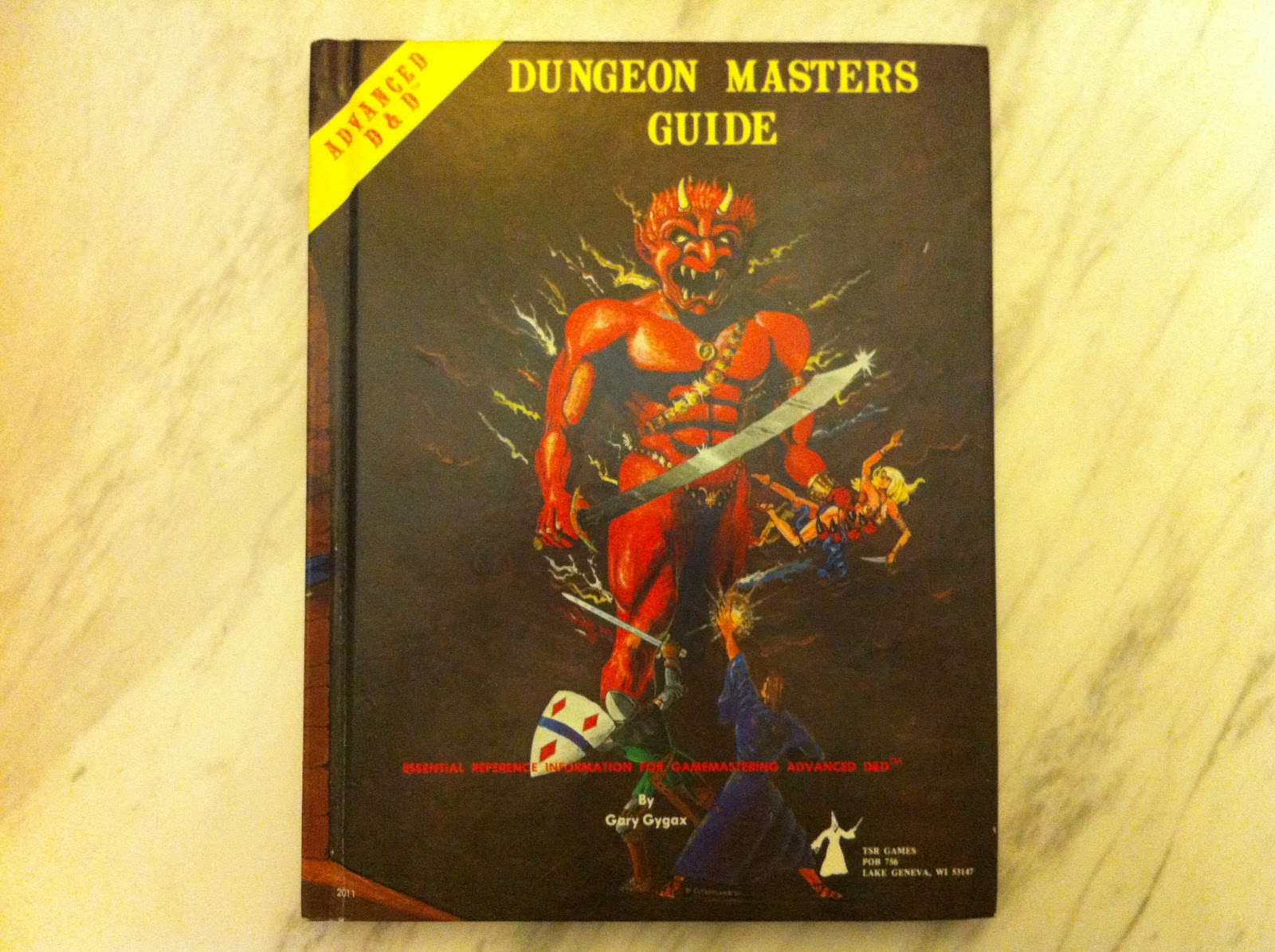
IV: Advanced D&D Dungeon Masters Guide. Gygax’s magnum opus. I believe this volume needs no introduction. I don’t even particularly like AD&D as a complete system, and this still would take a place near the top.

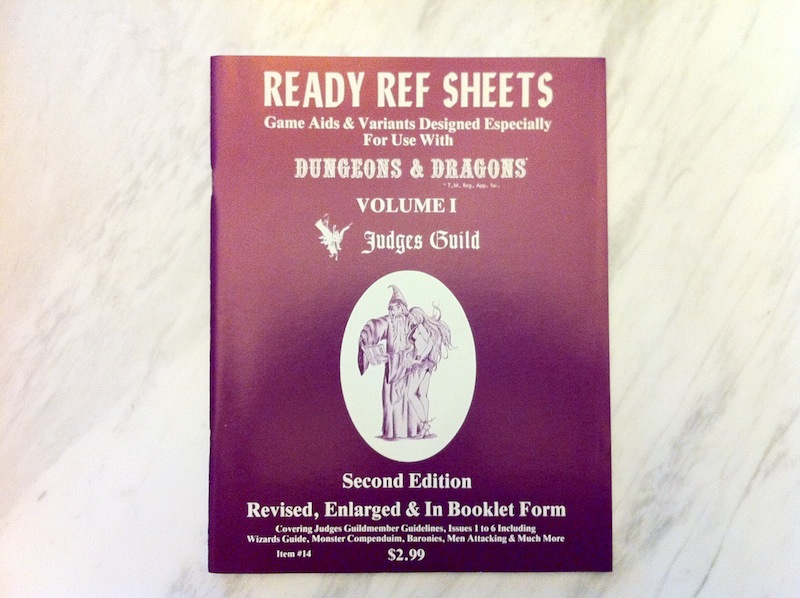
V: Ready Ref Sheets. This is sort of the Judges Guild DMG, but almost all tables. City encounters by social level, poison tables, offensive locution rules (social combat!), tables for ruins, verdict and punishment tables. A really great resource.

VI: Tome of Adventure Design. Random tables for just about everything, and lots of philosophy about how to use them. Another random monster generator. More tools for dungeon generation. There is not really anything else of this scope and quality available, even considering everything published to date.

VII: Warhammer Fantasy Roleplay. Another direction fantasy gaming could have gone. A great diversity of character options that manages to avoid choice paralysis and does not reward system mastery. Not afraid of dark atmosphere. Chaos metaphysics. Also, John Blanche (example 1, example 2, example 3).

VIII: LotFP Grindhouse Edition Referee Book. Probably the best thematic book on refereeing. Fits my “suspense movie” style perfectly. If we’re counting boxed sets as single items, of course the entire Grindhouse Edition would go here, but this is the standout booklet from that set for me. There is a free no-art PDF of the Rules & Magic book.

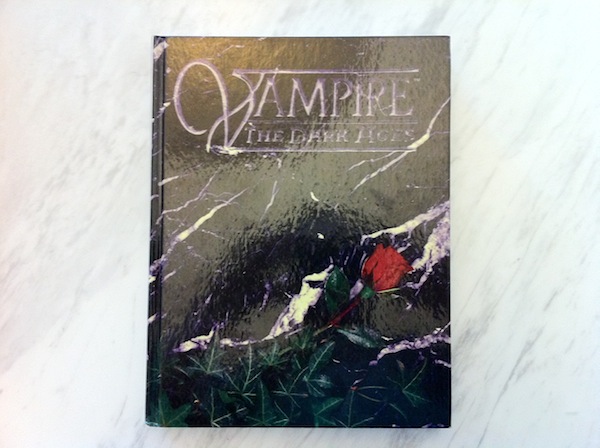
IX: Vampire: The Dark Ages. What is a Storyteller book doing in the top 10? I have enough D&D mechanics in my head that I don’t really need anything to play, so what I want in books is primarily inspiration. This book is beautiful, and has excellent atmosphere. I would probably still use D&D type mechanics. Dark ages Transylvanian dungeon crawls.

X: Carcosa. Unapologetic dark imagery, one of the best examples of a sandbox, random cthuloid monster generator, random robot generator, random tech artifact generator. This is how it’s done. It’s only missing a sample town. Perhaps the most attractive bound RPG book I own, too. Rich Longmore art.

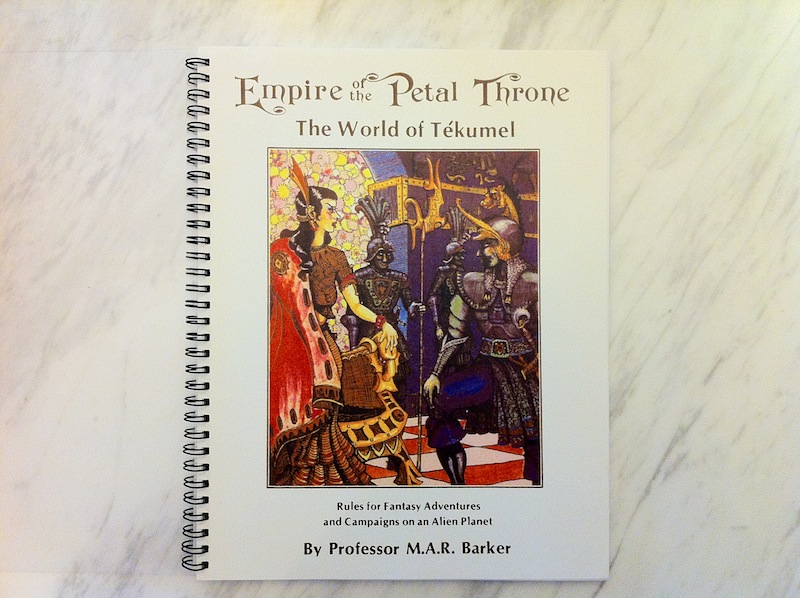
Runner-up I: Empire of the Petal Throne. Honestly, this should almost certainly be higher on this list. It isn’t only because I don’t yet feel knowledgeable enough about EPT to have much intelligent to say about it. I am more interested in EPT because of its system, not the setting, which I gather is odd.

Runners-up II, III: B/X D&D. In many respects, these two books make up my favorite iteration of the game. So why aren’t they in the top ten? Well, the 3 LBBs are already there, it’s hard to justify both, and the LBBs have more (though in less detail). For example, there is no stronghold resident generator in B/X. If B/X was one book, it might replace Vampire in the top ten.

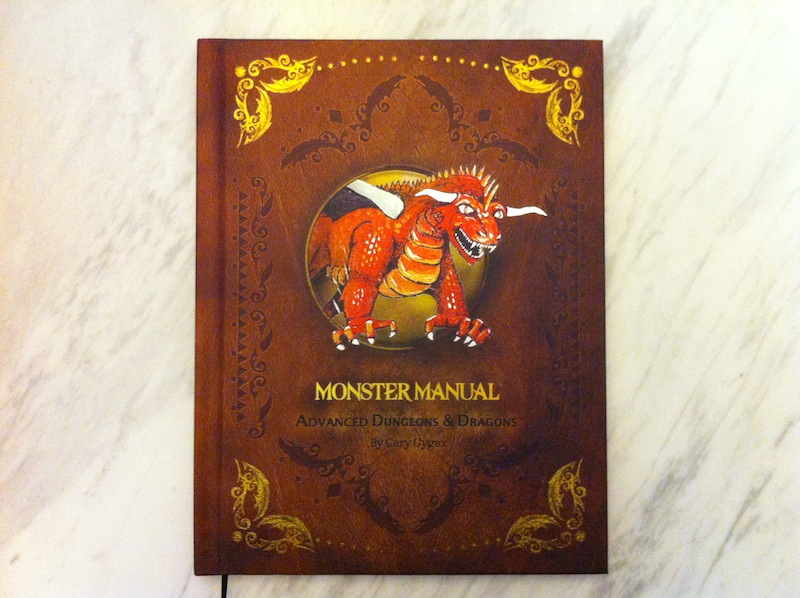
Runner-up IV: Monster Manual. If Monsters & Treasure from the original box didn’t also have treasure, the Monster Manual would probably win. It has all the important iconic monsters, though I still sort of prefer the open ended nature of the OD&D box monster write-ups.

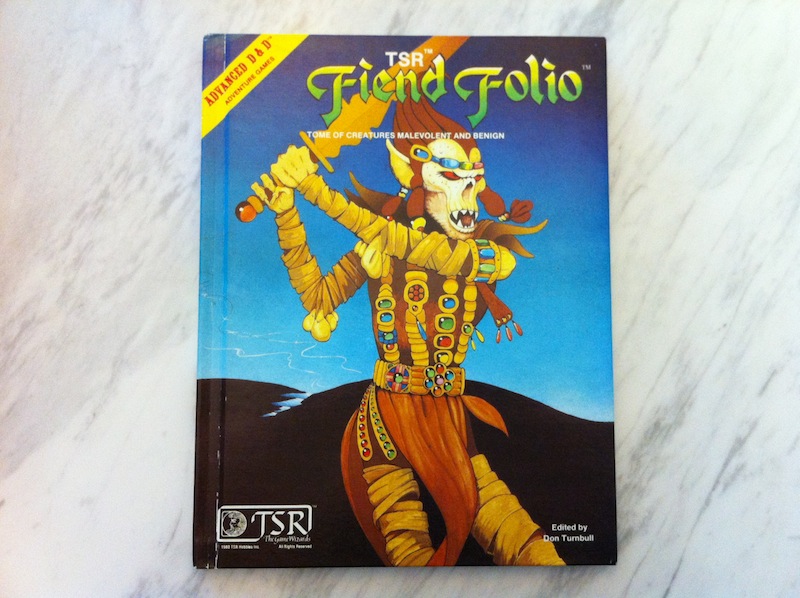
Runner-up V: Fiend Folio. More weird fantasy and less mythology than the Monster Manual. An excellent example of what might live in an alternate cosmology setting. Russ Nicholson art. Elemental princes of evil. Githyanki and drow. Grell. Killmoulis. Slaad. Man, maybe this should be in the top ten. The encounter tables in the back are also almost a complete setting.

Runner-up VI: Mutant Future. I’ve never seen the original Gamma World, but I gather Mutant Future is more compatible with D&D, which is how I would want to use a post-apocalyptic game anyways. I like MF more than Metamorphosis Alpha. One of the real strengths of the OSR is the off-genre offerings.

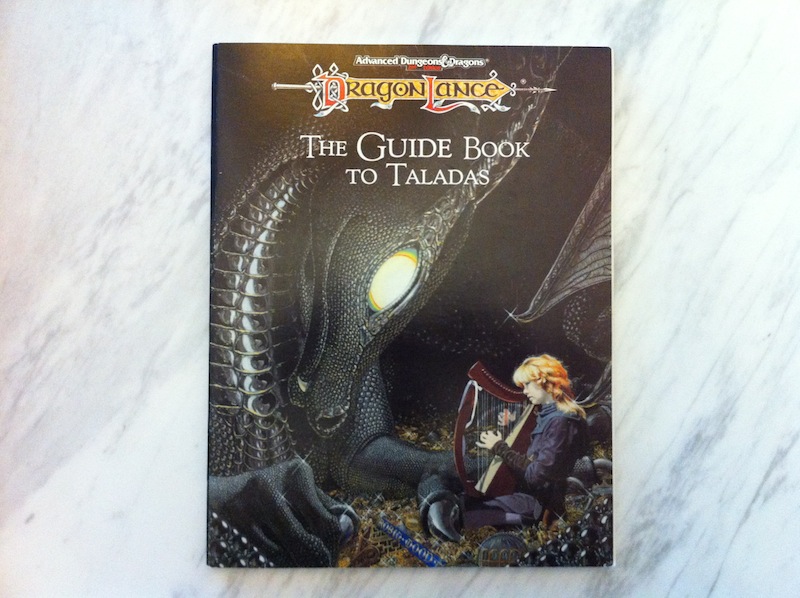
Runner-up VII: The Guide Book to Taladas. From The Time of the Dragon setting (and see here). One of my favorite settings; more original and less sprawling than most TSR settings without being batshit crazy like Dark Sun (which I also like). And illustrated by Stephen Fabian (linked pictures are just to give you a sense of his style; they are not from this book).

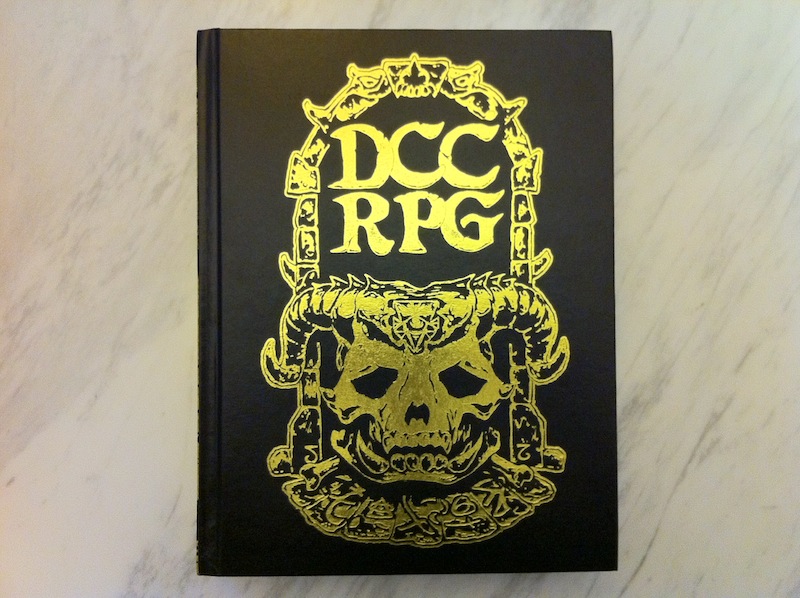
Runner-up VIII: Dungeon Crawl Classics RPG. The style and attitude of this volume are just amazing, and there are lots of rules ideas that could easily be poached, like the dice chain and variable attack bonuses. So what that half of the content is spell tables. Erol Otus art. Pete Mullen art. I’m usually not a fan of such physically cumbersome books, but DCC caries it.

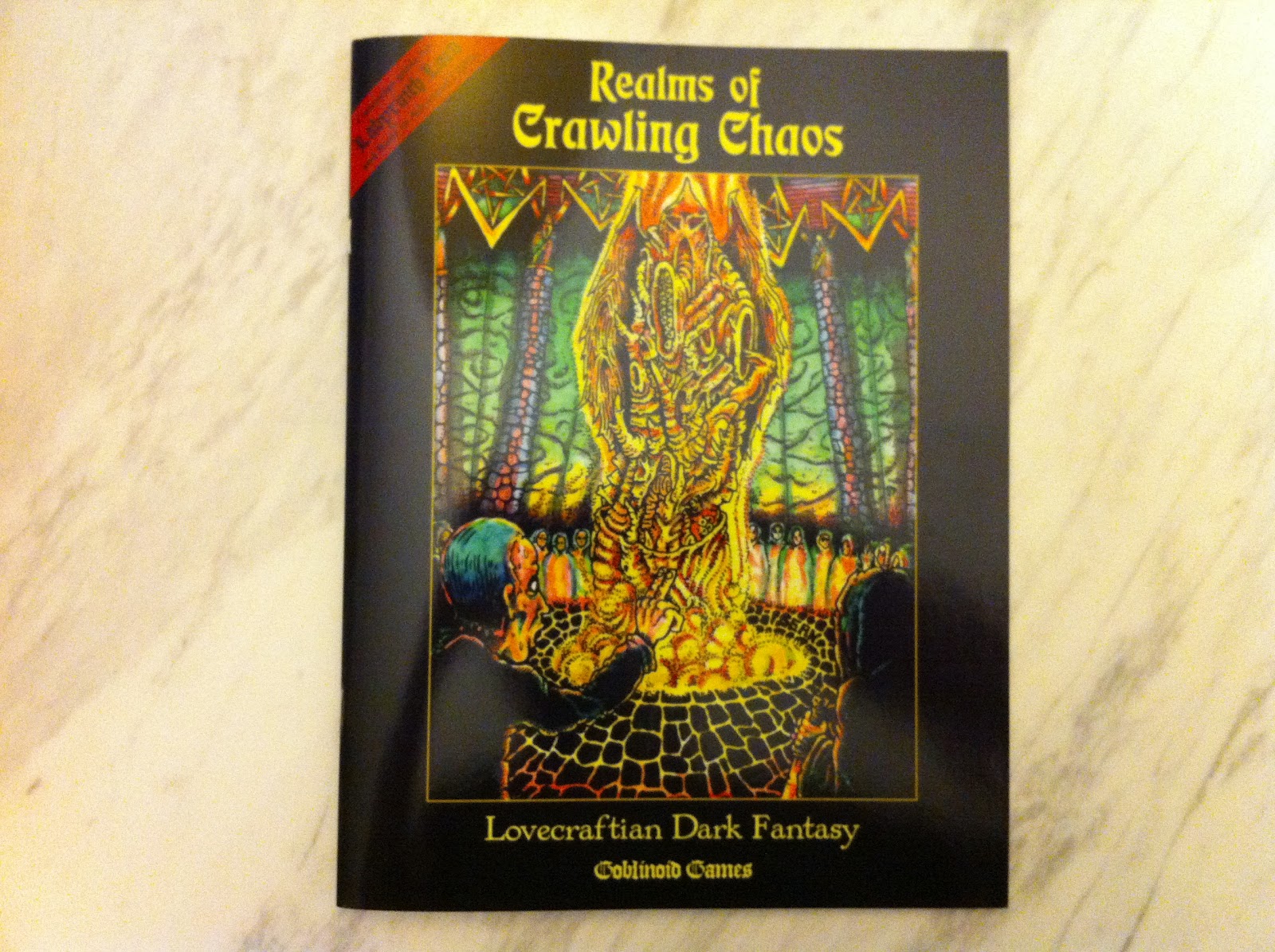
Runner-up IX: Realms of Crawling Chaos. This is a great supplement, very tightly written. A bit too much overlap with Carcosa to have both in the top ten, but very worth picking up, especially for the Reading Eldritch Tomes and Random Artifacts appendices. The psionics section is also good. Most of this book is reusable as open game content, too.

Runner-up X: D&D Rules Cyclopedia. With both OD&D and B/X in the running, there is no way that I could include the Rules Cyclopedia too, but it still deserves a mention for the breadth of material that it covers, even if pretty much all of the interior art is bland. The hex maps are great too, but but the book lacks guidelines on hexcrawl play.

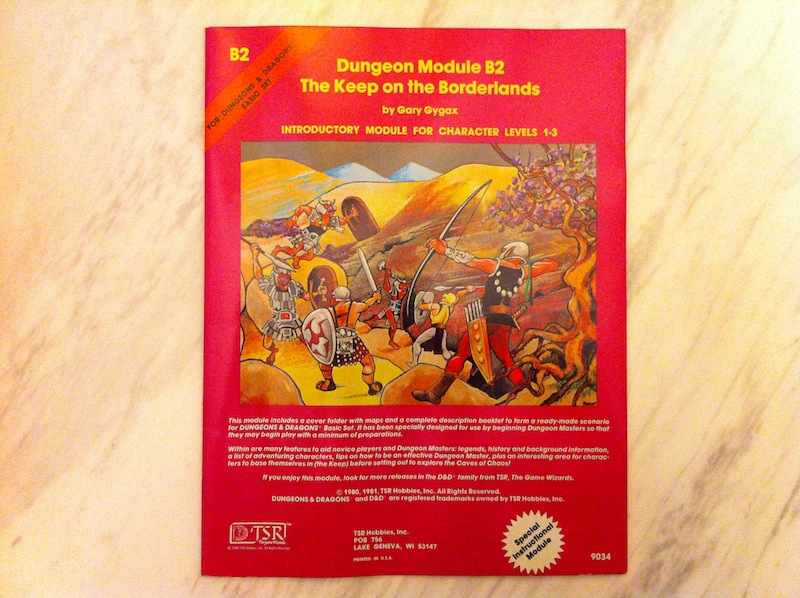
Runner-up XI: B2 The Keep on the Borderlands. I feel an example of town, wilderness, and dungeon all together would be good to have (though the wilderness in B2 is not really fleshed out). Perhaps this should be higher; I’m not sure. B2 also has lots of good referee advice that probably should have been in the core rulebooks.

Encumbrance Again

So, encumbrance. This is a solved problem, right? We have encumbrance by stone, the much-lauded LotFP encumbrance system, and several others. All these are great, and are certainly an improvement over counting coin weights or pounds.

I used the LotFP system successfully for my 4E hack game. It worked well, though there was some back and forth about how many daggers or torches counted as “an item” (we settled on 5). And, as elegant as the system is, it still requires some adding, and cross-referencing (even if all the info is on the character sheet). Math is for suckers. I think I can do it simpler and still maintain both verisimilitude and the resource management trade-offs.

Thinking more about it, there are really only a few questions I care about regarding encumbrance.

  1. Attack penalty?
  2. Skill penalty?
  3. Movement rates (exploration/combat/escape)?

I am going to focus mostly on the movement in this post, because the attack and skill penalties are going to be more system-bound. In OD&D, which I’ve been focusing on recently, combat has few enough modifiers that encumbrance penalties don’t seem to make much sense (strength does not affect to-hit or damage rolls, and dexterity does not affect armor class). Thieves will take some sort of penalty to their skills when wearing more than leather, but I’ll decide that later.

In my experience, three levels of resolution are usually enough to model interesting phenomena without getting caught up in minutia. So I’ll go with that here too. Light, medium, and heavy encumbrance. This also fits the effects described in Moldvay (120′, 90′, 60′, 30′ movement rates) and is implied in OD&D (see Men & Magic page 15; light, heavy, and armored foot move at 12″, 9″, and 6″, respectively). LotFP used the B/X effects while changing the coin math to slot math.

Here is the proposal.

  • nothing OR backpack OR leather armor =  no encumbrance (120’/40′)
  • backpack + leather OR chain =  light encumbrance (90’/30′)
  • backpack + chain OR plate =  medium encumbrance (60’/20′)
  • backpack + plate =  heavy encumbrance (30’/10′)
  • bulky item + any of the above = heavy encumbrance (30’/10′)

That’s it. Rather than counting items and keeping them under some cap, it turns into a simplified location-based system. Would it reasonably fit in your backpack? Is it a quick access item hanging off of a belt or bandolier? Is it in your hand? Those are the options. I left the 30’/10′ category there out of deference to Moldvay, but to be honest it seems a bit silly; I think I might make the bottom three categories all 60’/20′ (or maybe 30’/20′ to represent adrenaline).

This also means that we can encode this information by where we write the equipment on the character sheet without really requiring anything else. For example, have a carried items zone, a quick access zone, and a backpack zone (an example character sheet is included at the bottom of this post). This will also make it really obvious what is where as opposed to just measuring quantity (which is what the LotFP method does).

If you’re carrying some treasure, and it can reasonably fit in your backpack (say, some gems, a few hundred coins, and bowl), it all still just counts as a backpack. Once you start needing extra sacks or containers, things are either in your hands (see carried items below) or are bulky items such as treasure chests or small statues. Hirelings should be very useful here, and the backpack also becomes the unit of hireling carrying capacity.  Handing off or dropping your pack can help, and that seems reasonable to me. Note also that I am using backpack in a general sense here; if your character instead has a series of pouches or a satchel, that will just change (slightly) what is considered a sane amount of contents.

As mentioned above, in addition to items in a backpack, there are also the items that you are carrying and quick access items.

Carried. Most PCs probably have a few different modes regarding what they are holding. For example, torch mode and longbow mode. Writing those modes down will avoid any confusion later.

  • Primary configuration. Example (“exploration”): lantern and shield.
  • Secondary configuration. Example (“danger”): sword and shield.
  • Tertiary configuration. Example (“ranged”): light crossbow.

Players can record as many configurations as they like, though I imagine 2 or 3 should be enough for most characters. It takes a round to switch between configurations, unless the items you are switching to are “quick access” (see below), and you don’t mind dropping what you are carrying, in which case the switch is free (e.g., dropping a torch and drawing a sword).

Quick access. These are objects that are explicitly arranged for access during battle. Things like belted scabbards, slung quivers, boot daggers, and bandoliers all are in this category. More than 3 or 4 such items requires explanation. Even a relatively heavy quick access item (like a two-handed sword in a scabbard on a character’s back) will not be cumbersome, so these items don’t count for encumbrance at all (though as always, common sense should apply in specific situations).

Backpack or pouches. Obviously, backpacks can hold more and do it more efficiently. Also, items stored in backpacks are not accessible during combat, at least not without spending several rounds (I would do this by situation, but something like 1d3 + 1 would be reasonable).

Bulky items. These would include things like a rolled up carpet, a treasure chest, or a chair. Even if it’s not that heavy, carrying a single bulky item consumes both hands and immediately drops your character to the worst encumbrance category. In general, a character can only carry one bulky item in standard exploration mode, though in special cases, or for short periods, exceptions might be made (like a strong character hefting several stacked chests while walking across a single room). The first thing I imagine anyone would do when confronted with danger is to get rid of any bulky items (either by handing them off to a hireling, or dropping them).

A character sheet using this encumbrance system

From the looks of it, the best thing about this system is that it makes interaction with the movement rates really simple, without requiring any math at all. If you drop your backpack, you go one category faster. Getting rid of your quick access or carried items isn’t going to help unless you are carrying something bulky. I could imagine using this system in a FLAILSNAILS pickup game without even needing to explain it to the players (what are you carrying? what is on your belt? can the rest of your stuff really all fit in your backpack?) which is certainly not true of encumbrance by stone or the LotFP system.

The main simplification comes from the fact that an almost empty backpack is mechanically equivalent to a stuffed backpack. Situational rulings can correct such outliers easily though. And really, what adventurer doesn’t carry too much stuff?